
Three distinct programs. One framework.
Launch a career in modern finance. MS Finance Suite programs at the Fox School of Business are built around where finance is going, combining financial expertise with data science, machine learning, and AI. Three distinct programs. One framework. Find the pathway that fits your background and career goals.
Request More Information
Sign up to receive updates about the program, events, application deadlines and more.
Fast Facts
A quick snapshot of the structural elements that make Temple University’s MS Finance Suite exceptional.
Modern Curriculum
Required courses include Data Intelligence, Machine Learning in Finance, Data Science in Finance, Generative AI for Finance, and AI in Portfolio Management.
Superior Facilities and Technology
On campus classes in a modern building with spacious classrooms, several computer labs, and access to Bloomberg terminals.
Perfect Geographic Location
Study in Philadelphia, a major financial center with proximity to Vanguard, BlackRock, JPMorgan Chase, Goldman Sachs, and many other firms across the Northeast corridor.
Preparation for CFA Exams
Unique program calendar and curriculum design support sitting for professional certification exams during graduate study. Kaplan exam preparation materials are included in tuition.
Connections to Industry
Faculty and guest speakers bring experience from investment banking, asset management, wealth management, quantitative finance, and capital markets into the classroom.
Large Alumni Network
Over its long history, the MS Finance Suite at Temple University have produced numerous alumni who work in global financial centers around the world.
Three Pathways to Modern Finance
Each program provides a distinct mix of finance theory, mathematical depth, technological skills, and industry applications. Compare skills you can build and career pathways opened for you.
Financial Analysis MS | Quantitative Finance MS | Financial & Quantitative Analysis MS

Finance Has Evolved. Have You?
Financial Analysis MS
STEM-designated program that integrates modern finance theory with data science and AI-supported decision-making. Develops financial, strategic, and technical capabilities necessary to succeed in rapidly changing financial industry. Recognized as a CFA Institute University Affiliation Program (UAP) and incorporates CFA Level I, II, and III Body of Knowledge. Cohorted 30-credit program that can be completed full-time in 10 or 22 months or part-time.
Skills you will build
- Equity research and corporate valuation
- M&A and private equity
- Derivatives and digital finance
- Machine learning in finance
- Python and financial technology tools
Career Pathways
- Investment analysis and equity research
- Investment banking
- Asset management
- Portfolio and investment strategy
- FinTech and data-driven finance
Learn more about our Financial Analysis MS program.
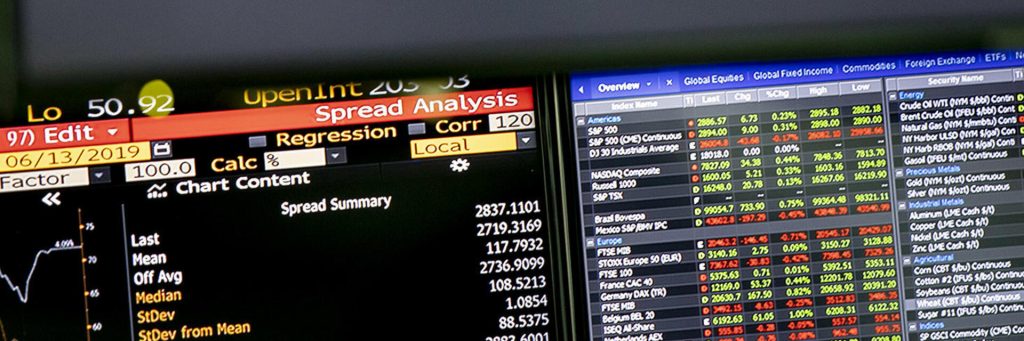
Engineer the Future of Finance
Quantitative Finance MS
STEM-designated program that develops advanced expertise in mathematical finance, derivative pricing, quantitative portfolio management, and financial engineering integrated with data science, machine learning, and AI-supported decision-making. Cohorted 30-credit program that can be completed full-time in 10 or 22 months.
Skills you will build
- Stochastic modeling and simulations
- Derivative pricing and financial engineering
- Quantitative portfolio management
- Machine learning in finance
- Python and MATLAB applications
Career Pathways
- Quantitative analysis and research
- Risk modeling and risk management
- Computational finance and trading
- Hedge funds and alternative investments
- FinTech and data-driven finance
Learn more about our Quantitative Finance MS program.

Master the Complete Finance Spectrum
Financial & Quantitative Analysis MS
STEM-designated program that uniquely interweaves applied finance, computational finance, predictive analytics, and AI-supported decision-making. Develops interdisciplinary expertise rarely found within a single finance program. Recognized as a CFA Institute University Affiliation Program (UAP) and incorporates CFA Level I, II, and III Body of Knowledge. Cohorted 36-credit program that can be completed in 22 months.
Skills you will build
- Investment analysis and equity research
- Quantitative financial analysis
- Risk management and risk analysis
- Hedge funds and alternative investments
- FinTech and data-driven finance
Career Pathways
- Equity research and corporate valuation
- Stochastic modeling and simulations
- M&A and private equity
- Derivative pricing and engineering
- Machine learning in finance
Learn more about our Financial & Quantitative Analysis MS program.
Which Program Is Right for You?
Background
Target Career
Financial Analysis MS
Business, economics, or finance major or minor
Investment analysis, investment banking, asset management, financial consulting
Quantitative Finance MS
Any major that requires calculus
Quantitative analysis, risk management, financial engineering, computational finance
Financial & Quantitative Analysis MS
Business, economics, or finance major; solid knowledge of calculus
Quantitative investment analysis, risk management, quantitative asset management, financial engineering
Upcoming Events
Join us to learn more about our programs and the Fox School of Business at an upcoming information session, webinar, or other special event.
Alumni Panel – Where Your Finance Career Can Take You
A graduate degree can help accelerate your career. But what does that journey actually look like after graduation?
Join us for the Finance Suite Alumni Panel and hear directly from accomplished alumni of Temple University’s Fox School of Business. Through candid conversations and real-world perspectives, panelists will discuss how their graduate education helped shape their careers across the finance industry.
Participants will:
- Gain insight into career paths pursued by Finance Suite alumni.
- Learn how graduate business education supports professional growth and advancement.
- Discover how alumni leveraged Temple’s network, faculty, and experiential learning opportunities.
- Understand trends and opportunities shaping today’s finance industry.
- Ask questions and connect with members of the Temple community.
You’ll have the opportunity to learn from alumni working across financial services, corporate finance, investment management, and related fields while gaining a clearer understanding of how a Temple graduate business degree can support your goals.
Finance Suite Discovery Session
The finance industry looks very different than it did a decade ago, even 5 years ago. Employers increasingly seek professionals who combine financial expertise with technology, analytics, and risk management skills. Join the Fox School of Business Admissions Team and the program’s Academic Director for a virtual information session exploring the MS Finance Suite and learn how our industry-focused curriculum prepares students to become today’s leaders in finance.
You’ll hear how Fox integrates financial analysis, quantitative finance, data science, machine learning, and artificial intelligence into our graduate finance programs. You’ll also learn about opportunities to pursue CFA and FRM exam preparation alongside your master’s degree while developing the professional skills needed for long-term career success.
During this session, you’ll learn how Fox helps students:
- Explore the differences between the MS in Financial Analysis, MS in Quantitative Finance, and MS in Financial and Quantitative Analysis programs.
- Learn how CFA and FRM preparation are embedded throughout the curriculum.
- Understand how data science, machine learning, and AI are integrated into graduate finance coursework.
- Discover career development resources, industry engagement opportunities and alumni outcomes.
- Learn about admissions requirements, scholarships, and application timelines.
Whether you’re interested in investment management, corporate finance, risk management, fintech or quantitative analysis, this session will help you determine which program aligns with your goals.
Admissions Support & FAQs
Learn about credentials, timelines, and career paths below, or connect with our admissions team directly for personalized support.

Liqing Chen
Associate Director of Graduate Enrollment
Reach Liqing by emailing or calling 215-204-1037.
Financial Analysis MS
What financial modeling and valuation topics are covered?
The MS in Financial Analysis covers equity analysis, corporate valuation, and value management. In applied valuation work, students use comparable-company and precedent-transaction analysis, DCF modeling, and real-options valuation techniques.
How does the program prepare students for CFA-related careers?
The MS in Financial Analysis is a CFA Institute University Affiliation Program whose curriculum incorporates the Level I, II, and III Candidate Body of Knowledge. The course calendar is aligned with the CFA exam dates, and Kaplan preparation materials are included in tuition for students who choose the CFA pathway.
What technical tools or software are taught?
Students work with Bloomberg, Capital IQ Pro, and FactSet for market and company research; Tableau and SQL for dashboards and data analysis; and Python and R for financial modeling, econometrics, and machine learning. Excel is used extensively for valuation, corporate finance, and portfolio assignments.
What applied finance projects or internships are available?
Applied learning includes a virtual portfolio simulation, case-based investment management work, an equity valuation project, market and economic analysis, and real-world portfolio challenges. Students may also pursue internships, firm visits, and other professional experiences.
What jobs do graduates typically obtain?
Graduates are prepared for investment analysis and equity research, investment banking, asset and wealth management, portfolio strategy, corporate valuation, and financial consulting. The program’s data science and financial technology components also support roles in FinTech and data-driven finance.
What are the admission requirements for this program?
Applicants should hold a bachelor’s degree, normally with at least a 3.0 GPA, and have prior coursework in accounting, finance, statistics, and micro- and macroeconomics. The application should include transcripts, résumé, one letter of recommendation, and statement of goals. Applicants without a qualifying degree from an English-speaking institution must provide an approved English-language test score. GMAT/GRE scores are optional.
How long does it take to complete the program?
The 30-credit MS in Financial Analysis offers full-time completion in 10 or 22 months, as well as a part-time path. The extended option gives students additional time for professional experience and CFA preparation while they progress through the curriculum.
What is the total cost of the program, including fees?
Total cost is based on 30 graduate credits plus applicable university and program fees. Temple sets tuition annually, so students should use the current Bursar tuition schedule and cost-of-attendance calculator. Whether the program is completed full-time or part-time may also impact the total cost.
Are scholarships or financial aid options available?
Domestic students may be eligible for federal loans and private education loans, and admitted Temple alumni may qualify for a 5% tuition scholarship. Domestic and international applicants are automatically considered for merit awards during admission review. Because awards are made on a rolling basis, applications should be submitted by the scholarship deadline.
What career support services are offered to students?
Fox’s Center for Student Professional Development provides one-on-one career coaching, professional development seminars, résumé and interview support, recruiting resources, and employer connections. Students also benefit from finance guest speakers, alumni engagement, and firm visits.
Financial & Quantitative Analysis MS
What quantitative finance topics are included in the curriculum?
The MS in Financial & Quantitative Analysis spans equity research and M&A modeling alongside stochastic calculus, option pricing, volatility modeling, financial econometrics, and quantitative portfolios. The curriculum also integrates data science, machine learning, and AI applications in investment and risk decisions.
How much emphasis is placed on mathematics, statistics, and coding?
Mathematics and statistics are interwoven in the program curriculum. Students study probability theory, econometrics, stochastic processes, and numerical methods. They implement financial analysis in Python and R, including machine learning methods applied to real financial data.
What financial modeling and risk analysis skills are developed?
Students build valuation models using comparable companies, precedent transactions, and merger accretion/dilution analysis. Quantitative courses cover derivative pricing, Value at Risk and expected shortfall, credit risk analysis, stochastic volatility modeling, and portfolio optimization.
What internship or applied learning opportunities are available?
Applied coursework includes Python and R projects using financial data, option pricing and volatility assignments, valuation cases, virtual portfolio simulations, and an integrated AI-supported trading system project with a strategy defense. Students may also pursue internships and use CFA-oriented coursework and Kaplan materials to strengthen professional preparation.
What industries hire graduates of this program?
Graduates can pursue investment analysis, equity research, investment banking, asset and wealth management, quantitative analysis, risk management, computational finance, financial engineering, FinTech and AI applications in finance. These paths extend across banks, asset managers, consulting firms, insurers, and technology-oriented financial institutions.
What are the admission requirements for this program?
Applicants should hold a bachelor’s degree, normally with at least a 3.0 GPA, and have coursework in accounting, finance, statistics, and micro- and macroeconomics. The review gives special attention to quantitative preparation. The application should include transcripts, résumé, one letter of recommendation, and statement of goals. Applicants without a qualifying degree from an English-speaking institution must provide an approved English-language test score. GMAT/GRE scores are optional.
How long does it take to complete the program?
The MS in Financial & Quantitative Analysis is a 36-credit, cohort-based program designed for completion in 22 months. Its four-semester sequence combines the entire financial analysis curriculum with advanced quantitative and computational coursework.
What is the total cost of the program, including fees?
Total cost is based on 36 graduate credits plus applicable university and program fees. Because Temple sets tuition annually, students should consult the current Bursar tuition schedule and cost-of-attendance calculator and budget across the program’s 22-month enrollment period.
Are scholarships or financial aid options available?
Domestic students may be eligible for federal loans and private education loans, and admitted Temple alumni may qualify for a 5% tuition scholarship. Domestic and international applicants are automatically considered for merit awards during admission review. Because awards are made on a rolling basis, applications should be submitted by the scholarship deadline.
What career support services are offered to students?
Fox’s Center for Student Professional Development provides one-on-one career coaching, professional development seminars, résumé and interview support, recruiting resources, and employer connections. Students also benefit from finance guest speakers, alumni engagement, and firm visits.
Quantitative Finance MS
What advanced finance, math, and programming topics are taught?
The MS in Quantitative Finance covers stochastic calculus, time-series and volatility models, numerical methods, derivative pricing, fixed income, Value at Risk, portfolio optimization, machine learning and AI-supported trading. Students also study digital finance topics including blockchain, cryptoassets, DeFi, stablecoins, and central bank digital currencies.
How does the program prepare students for careers in trading or risk management?
MS in Quantitative Finance students learn how to apply statistical models to trading and risk management decisions. Coursework covers model validation, execution costs, overfitting risk, and governance under real market frictions.
Are there applied financial modeling or derivatives courses?
Yes. The MS in Quantitative Finance curriculum contains several courses covering financial modeling and derivatives. In the derivatives courses, students learn how to price options and other derivatives using various analytical and numerical techniques.
What quantitative tools and software are used?
MS in Quantitative Finance students use Python and Jupyter notebooks for data science, machine learning, and trading systems; Excel and R for financial econometrics, time-series analysis, and volatility modeling; and SQL and Tableau for data analysis and visualization. Students also learn how to work with Bloomberg terminals, Capital IQ Pro, and FactSet.
What industries or employers recruit from this program?
MS in Quantitative Finance graduates are prepared to work in quantitative analysis and research, risk modeling and management, derivative pricing, computational finance, financial engineering, algorithmic trading, alternative investments, and FinTech. Potential employers include banks, asset managers, hedge funds, insurers, trading firms, and other organizations seeking mathematical finance expertise.
What are the admission requirements for this program?
MS in Quantitative Finance applicants need a bachelor’s degree and a strong quantitative foundation, including calculus and statistics. The application should include transcripts, résumé, one letter of recommendation, and statement of goals. Applicants without a qualifying degree from an English-speaking institution must provide an approved English-language test score. GMAT/GRE scores are optional. Admission review examines readiness for the program’s mathematical and computational depth.
How long does it take to complete the program?
The 30-credit MS in Quantitative Finance program can be completed full time in 10 or 22 months or part time in two years.
What is the total cost of the program, including fees?
Total cost of the MS in Quantitative Finance program is based on 30 graduate credits plus applicable university and program fees. Temple sets tuition annually, so students should use the current Bursar tuition schedule and cost-of-attendance calculator. Whether the program is completed full-time or part-time may also impact the total cost.
What career support services are offered to students?
Fox’s Center for Student Professional Development provides one-on-one career coaching, professional development seminars, résumé and interview support, recruiting resources, and employer connections. MS in Quantitative Finance students also benefit from finance guest speakers, alumni engagement, and firm visits.
Are scholarships or financial aid options available?
For the MS in Quantitative Finance program, domestic students may be eligible for federal loans and private education loans, and admitted Temple alumni may qualify for a 5% tuition scholarship. Domestic and international applicants are automatically considered for merit awards during admission review. Because awards are made on a rolling basis, applications should be submitted by the scholarship deadline.
Application Deadlines
Application deadlines by term and admission type.
| Deadline Type | Fall Term |
|---|---|
| Early Admissions | December 15 |
| Scholarship* | March 1 |
| International | March 1 |
| Final | June 30 |
* All applicants are automatically evaluated for merit scholarships upon submission and reviewed on a rolling basis.
It’s not just about geography—it’s about opportunity.
Temple University’s Fox School of Business, nestled in the heart of Philadelphia, blends business acumen with cultural richness. Strategically located between New York City and Washington, D.C., our campus offers access to influential markets and a vibrant urban experience. Here, you’ll thrive in a dynamic atmosphere that nurtures future leaders in business, arts and beyond. Join us and position yourself at the crossroads of opportunity.

Beyond business as usual.
Request more details or speak to our admissions team directly today.
Explore All Fox Graduate Programs
Gain the specific expertise and industry know-how to propel your career. Each Fox Graduate Program features a curriculum that’s led by industry-experienced faculty, so you develop the skills and knowledge that will electrify your resume.

Privacy Policy • Cookies Policy • Manage Cookies
Copyright 2026, Temple University. All rights reserved.