
For today’s executives, preparing for what’s next requires more than learning business concepts. It requires seeing those concepts in action and understanding how business functions are interconnected. That is what makes today’s leaders successful in navigating an increasingly complex business environment.
It is this interconnectedness that is the foundation behind the Future Ready Executive Series (FRES), a signature component of the Executive MBA Program (EMBA) at Temple University’s Fox School of Business and its in-person residency experience.
Beginning Friday afternoons during residency weekends, FRES connects EMBA students with industry leaders, subject-matter experts and organizations confronting many of the same challenges students are exploring in the classroom. The result is an experience that brings business education to life—and gives executives an opportunity to see where their learning applies in the real world.
“We heard directly from the people running SEPTA and the World Affairs Council during the very events they were managing—access a classroom alone can’t replicate,” EMBA student Rachel Fox-Sosalski said.
“The World Affairs Council showed us the city’s strategic planning efforts, including transportation planning, which began well in advance of hosting the World Cup. Then, SEPTA showed us the operations behind it. SEPTA’s account gave us firsthand examples of the importance of conducting strategic activities like scenario planning, which set the stage for our risk and operations management course. Connecting strategy to execution is exactly what I came to the Fox EMBA program to practice.”
“The Fox EMBA promised us real-world learning from experts and the Future Ready Executive Series (FRES) sessions delivered it,” EMBA student Rachel Fox-Sosalski said.
From leadership to AI
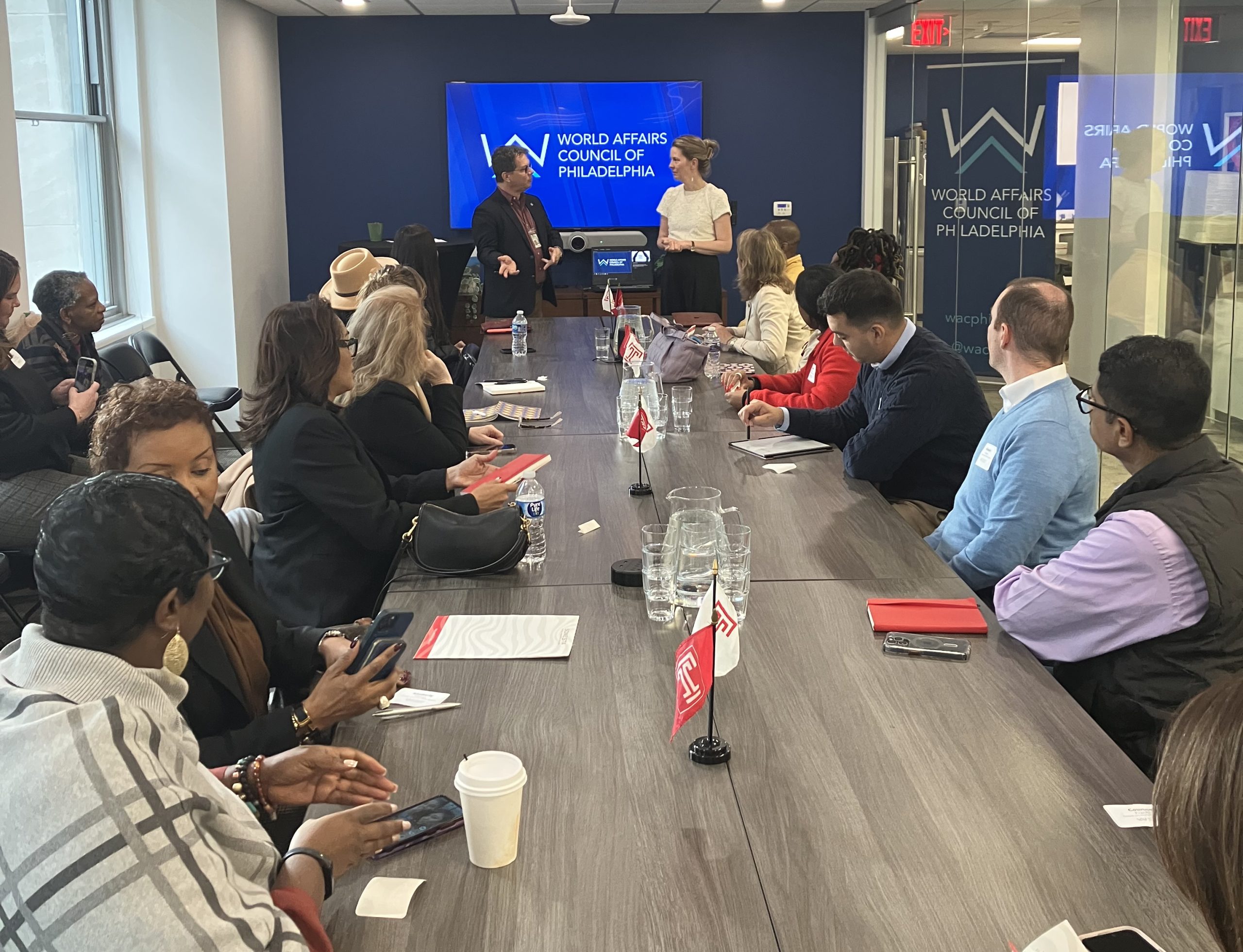
The World Affairs Council of Philadelphia gave EMBA students at Temple University’s Fox School of Business an in-depth look at how organizational strategy is driven by the economic climate.
(Photo courtesy of Rachel Fox-Sosalski)
Each FRES session offers a different perspective on what it takes to lead in a changing business landscape.
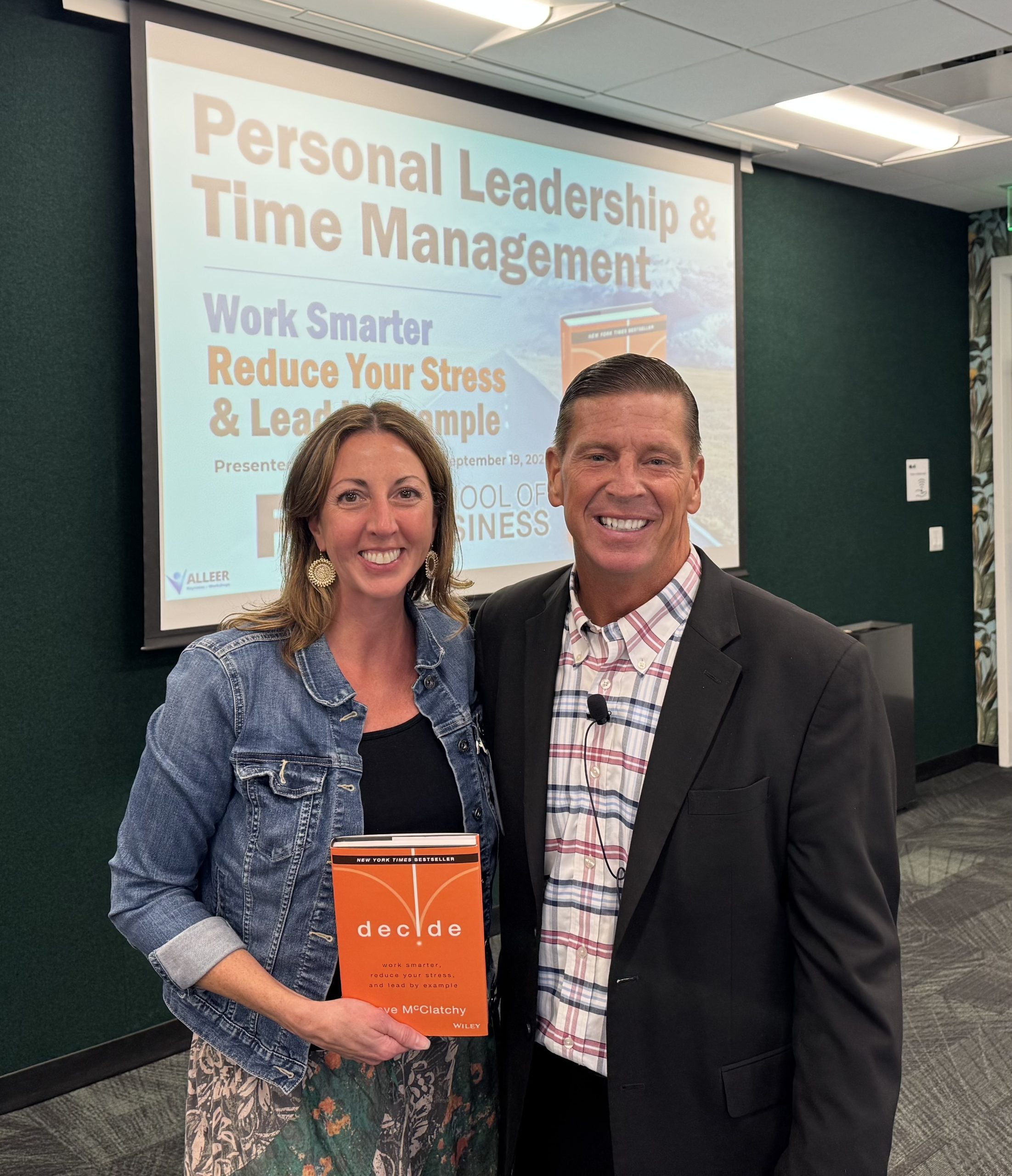
Leadership took center stage with Steve McClatchy, an award-winning keynote speaker and New York Times bestselling author, who addressed leadership, time management and preparing for success in the EMBA experience.
Students also explored the forces shaping business beyond the organization itself. Lauren Swartz, president and chief executive officer of the World Affairs Council of Philadelphia, connected global economics to strategy, while Michael Luckenbill, senior solution architect at Capgemini, examined management information systems and data-based decision-making.
The series also prepares students to lead across borders. A session featuring Takashi Ito, EMBA ’18, and Yukari Fujiwara, an instructor in Temple’s College of Liberal Arts, helped students prepare for the EMBA program’s global immersion to Japan through cultural and language learning.
“The connections I made during the World Affairs Council of Philadelphia session reminded me how Philadelphia fits into the global community, and how the Fox School of Business works to develop us as global business leaders,” EMBA student Dr. R.O. Corbett said.
And as technology continues to reshape organizations, FRES brings those changes directly into the conversation. David Place, corporate vice president at RaSpect AI, explored how artificial intelligence is disrupting business and challenging leaders to think differently about the future.
“I recently had the opportunity to learn from an incredible group of leaders and faculty—and what struck me most was how different each conversation was. It’s the residency weekends and moments like this that remind me exactly why I signed up to pursue a Fox Executive MBA,” EMBA student Richard Venne said.
“It’s the residency weekends and moments like this that remind me exactly why I signed up to pursue a Fox Executive MBA,” EMBA student Richard Venne said.
Learning from leaders in the field
Perhaps one of the clearest examples of FRES in action came when EMBA students heard from members of SEPTA’s Risk and Operations team in connection with their risk management coursework.
The session featured Tim Cornish, risk manager; Sarah Powell, senior director of system safety; Greg Buzby, chief officer of Rail Equipment Engineering & Maintenance; and Michael Kendall, assistant treasurer.
Together, they demonstrated the complexity of managing risk in a large organization, giving students multiple perspectives on how safety, operations, infrastructure, finance and strategy intersect.
Experiences like these are central to the value of FRES: Students aren’t simply learning about business challenges. They are hearing directly from professionals responsible for addressing them.
“The FRES sessions provided me a chance to understand what happens when things go off script. Being able to access this type of insight from professionals who are enmeshed with the material has already positively impacted the way I view my role as a leader in academia,” EMBA student R.O. Corbett said.
Two-way exchange
Because Fox EMBA students bring substantial professional experience of their own, FRES creates a two-way exchange. Students can test ideas against the experiences of other leaders, challenge assumptions and bring new perspectives back to their coursework—and to their organizations.
Ultimately, being future ready is not about predicting what comes next. It is about developing knowledge, adaptability and perspective to lead through it. The Fox Executive MBA students are doing exactly that.